


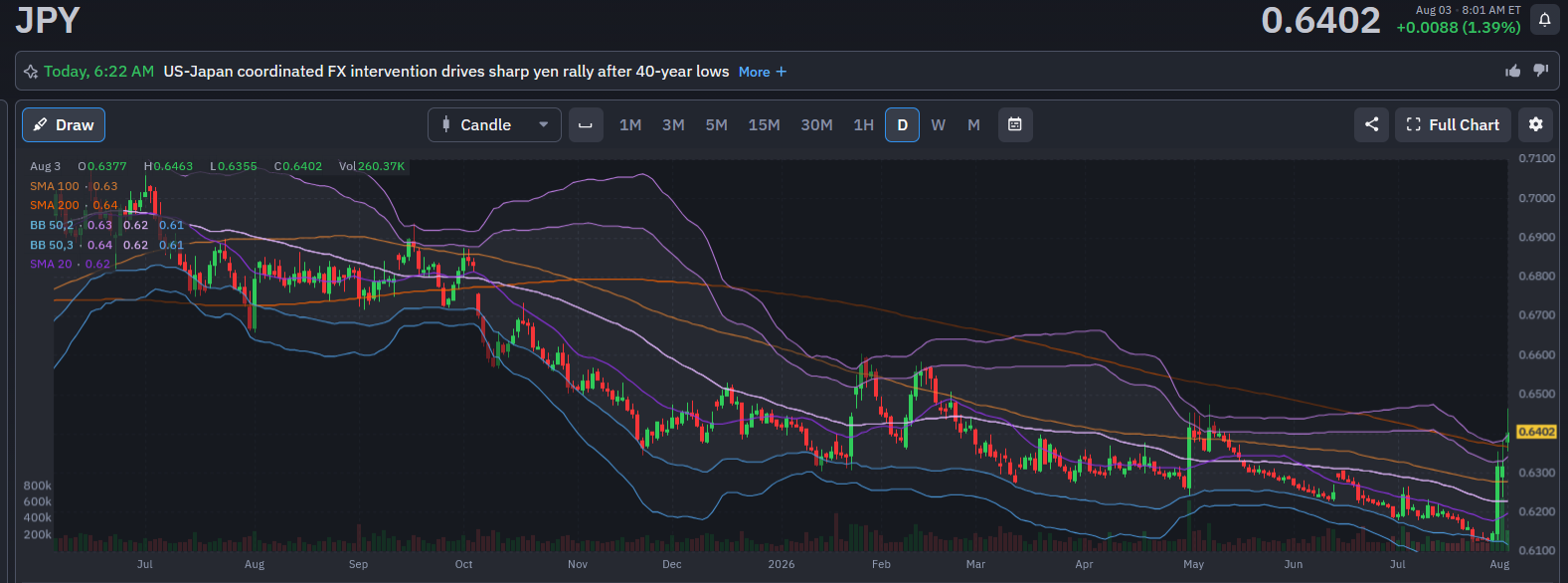
The US Treasury bought Japanese yen last Friday and again Monday morning in its first coordinated intervention in the currency since 2011, following Japan’s earthquake and tsunami. It is only the third such move since 1998. Treasury Secretary Scott Bessent confirmed the action: “Friday’s coordinated foreign exchange actions countered disorderly yen movements,” and pledged, “we will not hesitate to participate in further joint intervention.” While the trades are small, the message is clear. The US and Japan will no longer tolerate further depreciation of the yen versus the dollar.
Before the intervention, the yen was trading at 40-year lows versus the dollar. In our opinion, Bessent isn’t overly concerned about Japan’s currency; it’s likely rising yields in the US Treasury bond market driving his actions. Japan holds $1.15 trillion in Treasuries, making it the largest foreign holder on earth. Historically, when Japan defends its currency, it must sell its Treasuries to raise dollars to purchase yen, resulting in higher US yields. That helps explain one factor driving yields higher recently.
To help Japan accomplish these interventions, Bessent is pushing a little-known Fed tool, the FIMA (Foreign and International Monetary Authority) repo facility. The program allows nations to borrow dollars against their Treasury holdings instead of selling them.
We wrote a few articles and commentaries about the yen carry trade’s importance to global liquidity and saw how yen intervention can greatly impact markets in August 2024. With this intervention, Bessent is trying to manage that risk preemptively and prevent one of the largest buyers and holders of Treasury debt from becoming a forced seller.
What To Watch Today
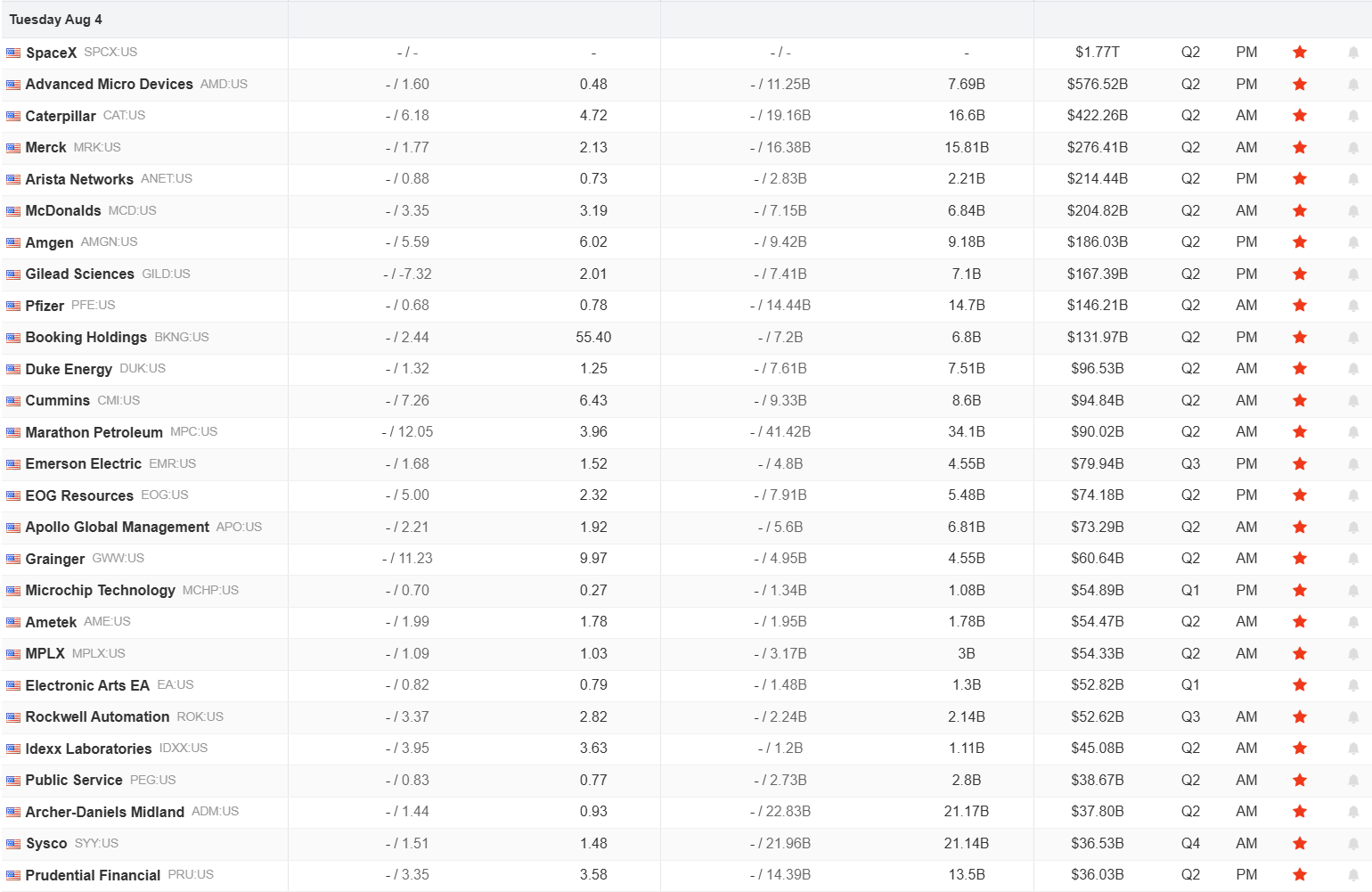
Earnings
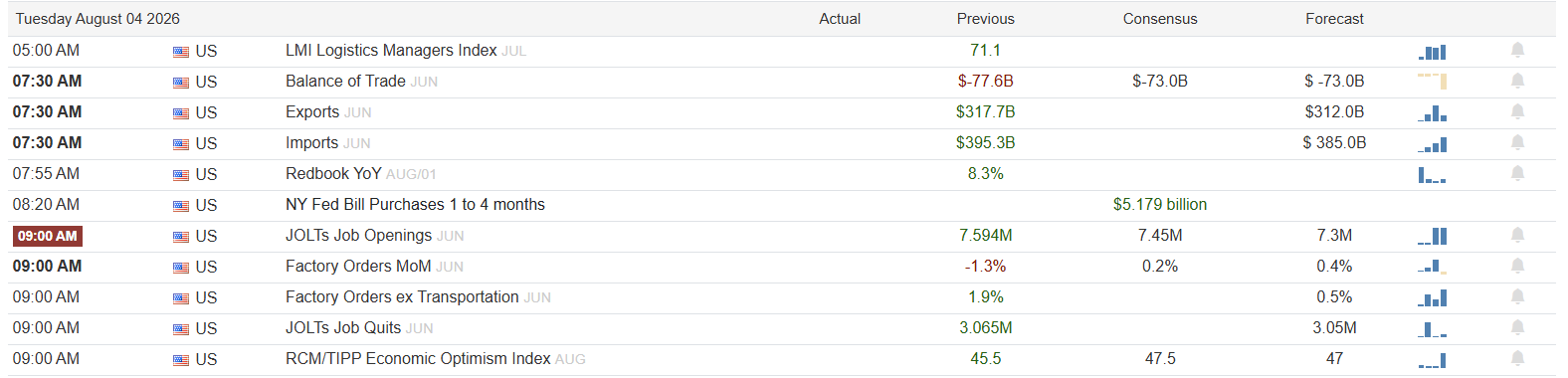
Economy
Market Trading Update
Yesterday, we discussed the market’s technical backdrop, given last week’s decline and the rally back above the 50-DMA. Today I want to stay on the AI trade but narrow it to the one name reporting Tuesday night, because the SpaceX lockup expiration turns this into the most lopsided setup on the board.
Let’s anchor it in the actual tape. SPCX traded at $111.80 late Monday morning after printing a fresh all-time low of $104.83. That’s 50.5% below its June 16 intraday high of $225.64 and about 17% under the $135 IPO price. Here’s what most of the coverage misses. There is no 50-day moving average on this chart, and no 200-day either. The stock is 35 sessions old. Anyone showing you a long-term trend line on SPCX drew it from imagination.
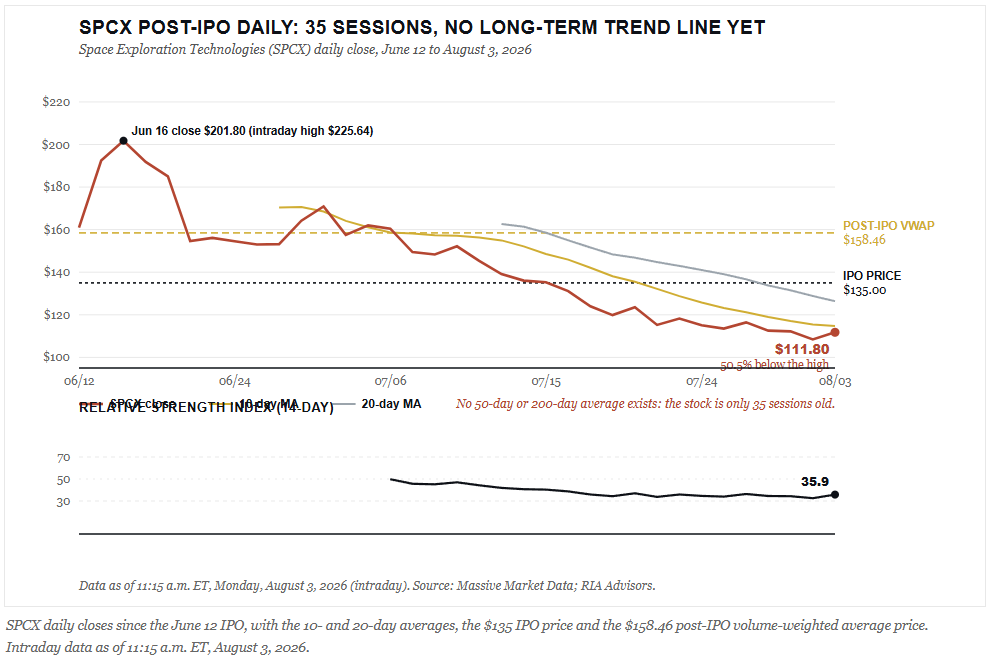
So use what exists. The 14-day RSI sits at 35.9, soft but NOT washed out, and the price is 11.5% below its 20-day average of $126.38. The figure that matters more is the volume-weighted average price since the IPO, $158.46. On average, every share traded in this stock was bought 29% above today’s quote. That is an enormous cohort of underwater holders stacked above the market.
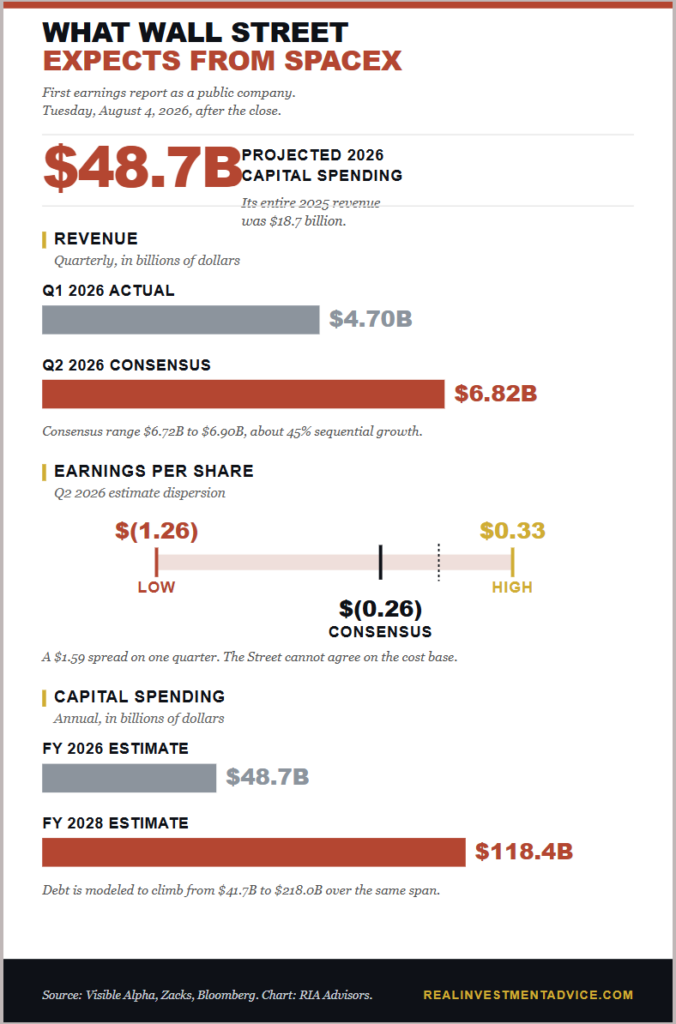
Now the bar on Tuesday has to clear. Consensus expects roughly $6.8 billion in revenue, up from $4.7 billion in the first quarter, and a loss of nearly a quarter per share, with estimates ranging from negative $1.26 to positive $0.33. That spread tells you nobody has the cost base pinned down.
The segment split is the whole argument. Starlink connectivity is modeled at a 35.9% operating margin and carries the firm, while Space and the xAI-built AI division both lose money. Capex, meanwhile, is projected to climb from $48.7 billion this year toward $118 billion by 2028, and debt from $41.7 billion to $218 billion.
Then Thursday shows up. Roughly 911.5 million shares unlock on August 6, worth about $102 billion and more than the entire existing float. Michael laid out the valuation problem in Can SpaceX Fire On All Cylinders? near 100 times sales. The multiple has compressed since. The supply picture has not.
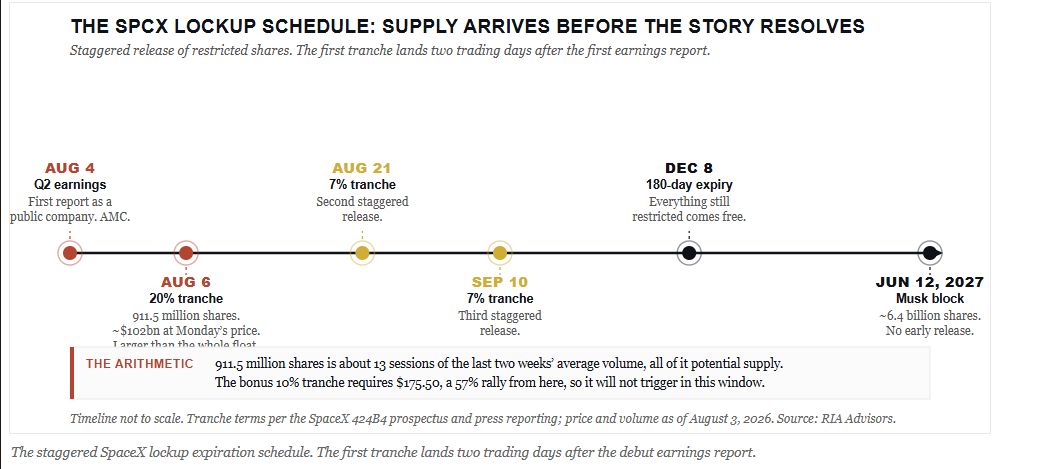
So is the decline an entry point? Not yet. The 50% drawdown in seven weeks suggests the supply of shares for sale remains high, and there are no technical signs of a bottom yet. We aren’t underwriting a position in the Equity Aggressive Growth Model until this stock has a trend line to manage risk against and the August 6 supply has cleared. Let the float double, let the sellers finish, then price it. You forfeit the first bounce, but you also avoid catching a $102 billion distribution with your face.

Value Continues To Beat Growth
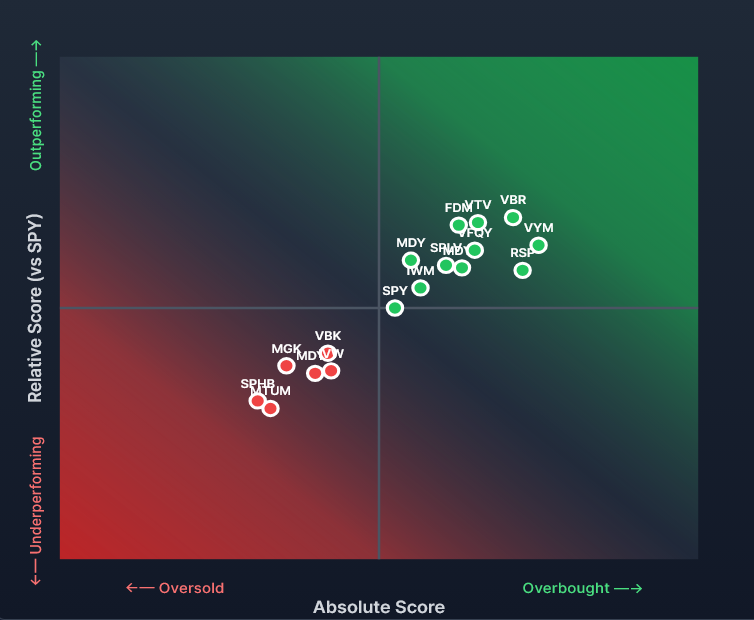
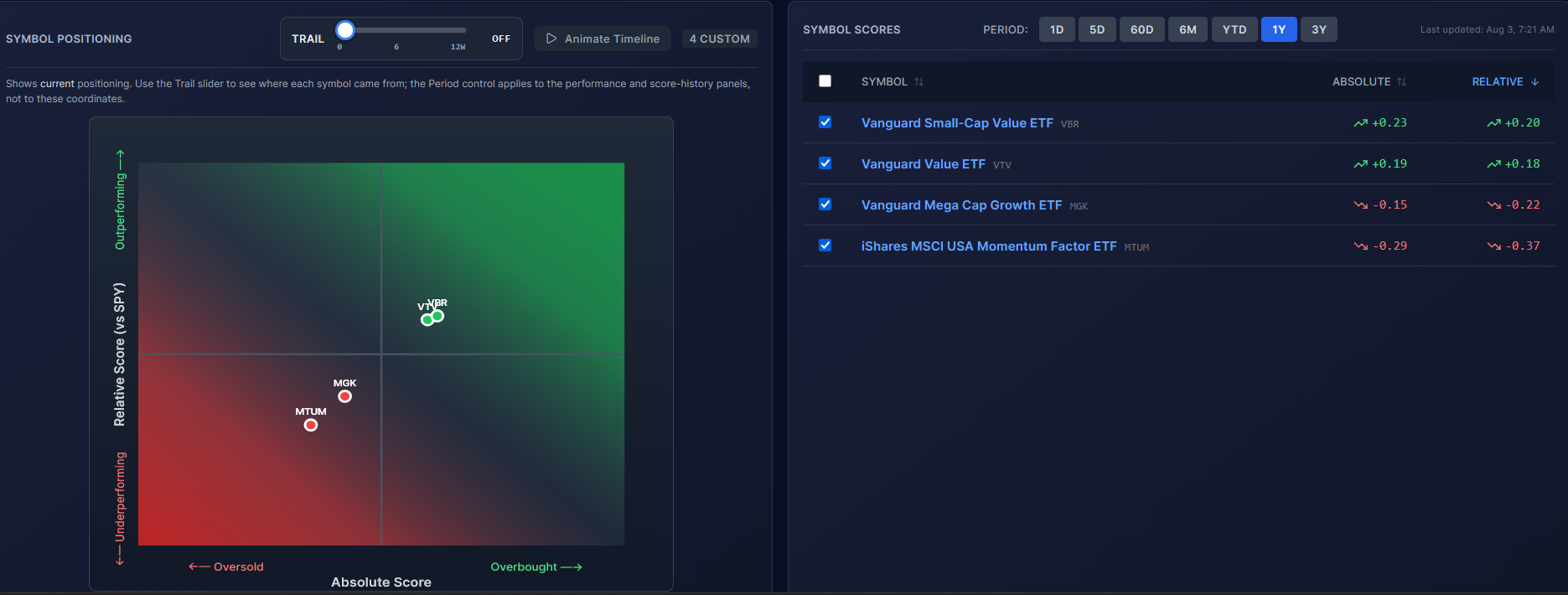
Value is overbought, and growth is oversold. The graphic below from the new “coming soon SimpleVisor.ai” shows that every value and small-cap factor is overbought, while every growth factor is oversold. The second graphic declutters the top graph to paint the same picture. Amazon and Microsoft, which both jumped by about 15% on earnings last week, shrank the wider divergence between growth and value. While the rotation has certainly benefited value and small cap stocks, the relationships are not stretched to the point that we should expect it to flip soon. Simply, this trend may continue to favor value over growth before a rotation toward large-cap growth and technology occurs.
Bonds In Your Portfolio: Why Ditching Them Is The Wrong Move
Lately, it seems like you can’t open a financial publication without stumbling across another article declaring the 60/40 portfolio dead. The pitch is everywhere: bonds are broken, the old rules no longer apply, and investors should modernize by swapping the bonds in their portfolio for Bitcoin, gold, or whatever alternative the asset management industry is currently selling.
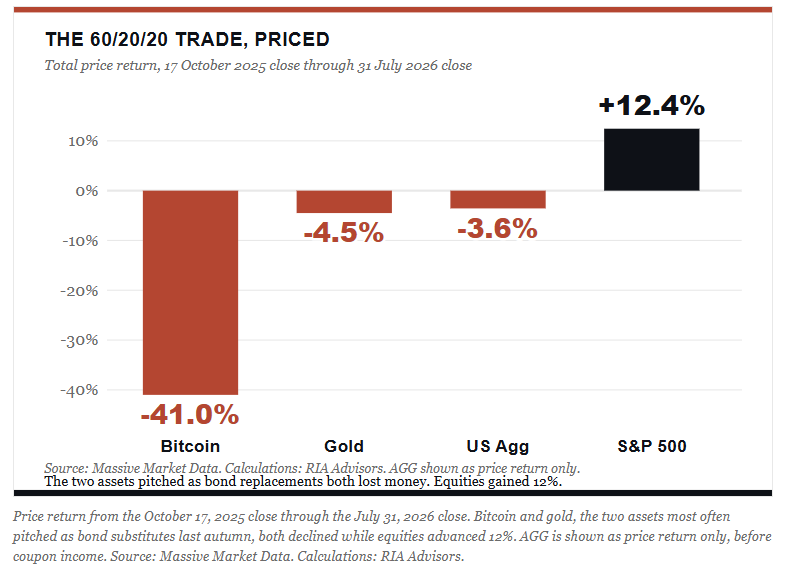
Last October, CNBC ran a story on the rise of the “60/20/20” portfolio. The pitch was simple. A positive stock bond correlation has broken diversification, so investors should take half of the bond allocation and move it into gold and Bitcoin. Several strategists lined up to endorse it.
Well, now that 9 months are in the rearview mirror, we can price in just how valuable that advice was.
From the October 17 close through Friday, Bitcoin fell almost 41%. Gold slipped about 4%. The S&P 500, the very asset those investors were told to diversify away from, gained more than 12% over the same stretch, which means the hedge fell hard while the risk it was bought to offset went straight up. So the two “replacements” didn’t hedge anything. They just lost money.

Tweet of the Day
New UPDATED Trading Rules With Desktop Printout
“Want to achieve better long-term success in managing your portfolio? Here are our 15-trading rules for managing market risks.”
Please subscribe to the daily commentary to receive these updates every morning before the opening bell.
If you found this blog useful, please send it to someone else, share it on social media, or contact us to set up a meeting.