


Having just hit record highs following an historically impressive 13-day winning streak, stocks are susceptible to a pullback or, at a minimum, consolidation. Beyond the direction over the next week or two, the bigger question is what comes after that. The answer to the question will present itself over time. However, in the meantime, we can focus on breadth to help get a step on the market.
Regarding breadth, consider that despite the S&P 500 being at a record high, only 65% of stocks are above their 20-day moving averages, 54% above their 50-day moving averages, and 60% above their 200-day moving averages. The graph below, courtesy of Charles Schwab, shows that a large majority of stocks, broken down by sector, are below recent monthly, quarterly, or 52-week highs. Even in the leading sectors, like technology, only 58% of the underlying stocks are at a 4-week high. Interestingly, despite oil trading in the mid-$90s, none of the energy sector stocks are trading at a recent high. The broad breadth takeaway is that a few stocks are leading the market higher, while many others are not keeping up.
We would like to see breadth improve to increase our confidence that the market will continue to move higher over the next few months. When a good majority of stocks across many sectors rise together, it reflects genuine, widespread bullish conviction and real money flowing into equities. A narrow rally, as we have thus far, is often driven by momentum chasing and sector-specific themes. That kind of demand is weak and can reverse more easily.

What To Watch Today
Earnings
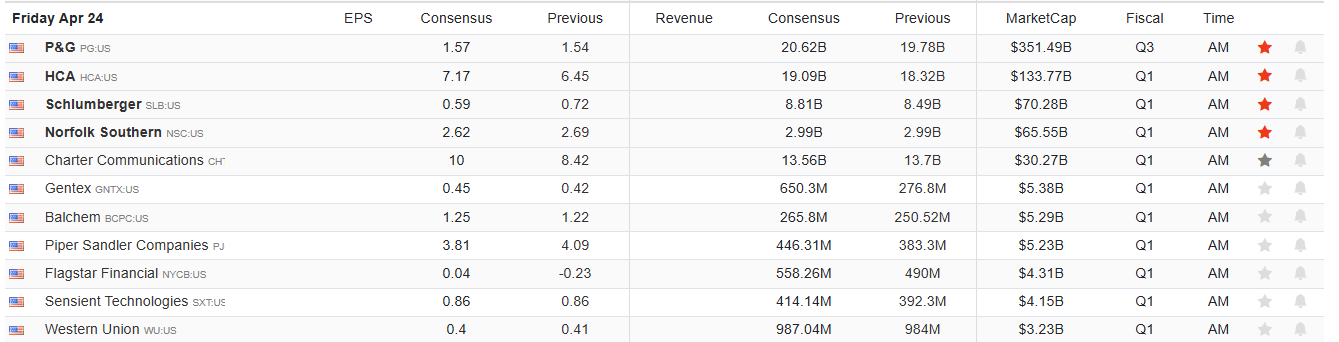
Economy

Market Trading Update
Yesterday, we discussed why the market continues to look past the Strait of Hormuz closure and the temporary rise in oil prices. That conversation leads into today’s discussion about Energy stocks, which have largely erased the gains from a month ago amid the Iran crisis. Is there a buying opportunity for Energy, and if so, for how long?
Brent crude touched $105, and WTI pushed past $96 yesterday as the U.S. naval blockade seized ships and Iran attacked vessels in the Strait. You’d expect the energy sector to celebrate, but it really hasn’t. The Energy Select Sector SPDR (XLE) topped out in late March near $63, sold off roughly 13 percent, and is now stalling near $56 while crude grinds higher. That disconnect tells you more about how equity markets are pricing this conflict than any headline will.
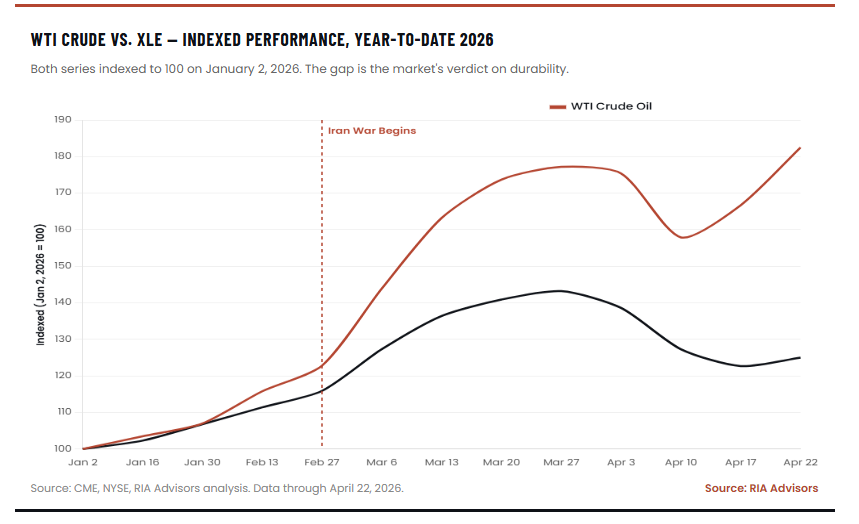
Equity investors are treating this crude spike as an event, not a cycle. We saw the same behavior in March when oil ripped higher and XLE barely flinched. Investors have decided the geopolitical premium is transient, and they’re refusing to pay integrated majors for barrels they don’t believe will last. Exxon and Chevron, which together make up 40 percent of XLE, haven’t been repriced to $100 crude because the forward curve is already deeply backwardated.
Here’s the setup most investors won’t see coming. When the Strait reopens, and history says that’s a question of weeks rather than years, the supply curve shifts fast. Roughly 13 million barrels per day of production are currently sidelined. Add Iran’s blockaded 1.3 million bpd, replenished floating storage, OPEC+ spare capacity, and a 2026 baseline already projected for a 2 million bpd surplus. Those barrels don’t disappear. They just wait.
So is this a trade or a longer-term hold? For me, it’s a trade. The conditions that support a secular bid in energy, sustained demand growth, chronic capex underinvestment, and structural tightness, aren’t in place. What we have is a war premium layered on top of a structurally oversupplied market.
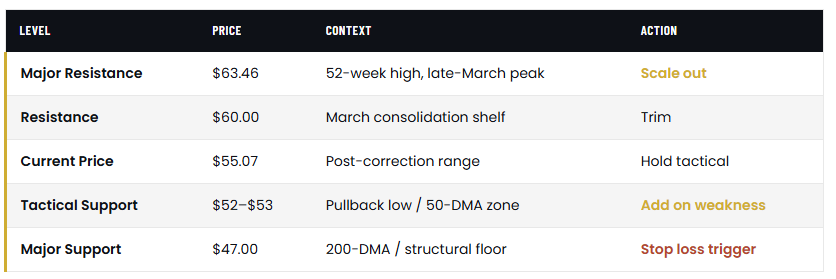
If you’re underweight energy, scale into XLE on pullbacks toward the $52 to $53 support shelf. Keep the position tactical, 3 to 5%, not a core holding. For a sharper beta to the headline, favor independent E&P names through XOP and oilfield services through OIH, where operating leverage to crude is meaningfully higher than the majors. Set a hard stop below the 200-DMA. Take profits into the late March high near $63. Scale out aggressively on any diplomatic breakthrough. Most importantly: Do not round-trip the trade.
Trade the war premium, don’t marry it. When the Strait reopens, the supply overhang returns, and late buyers will be left holding the bag as energy equities give back the geopolitical bid they only half embraced on the way up.

Treasury Buybacks: Money Printing Or Prudent Cash Management?
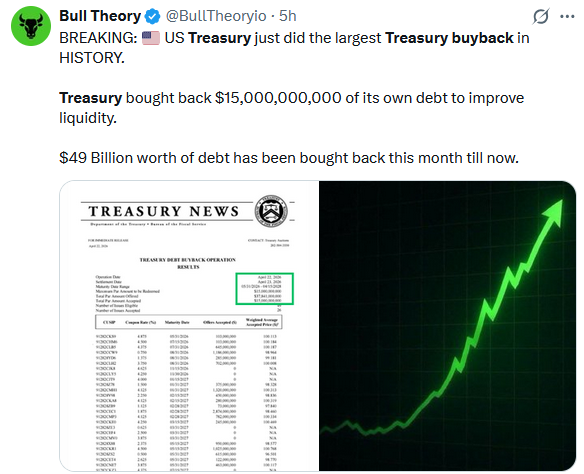
We were forwarded the tweet below and asked, “Why is the Treasury printing money?”
The quick answer is they are not printing money. The $15 billion in buybacks consisted entirely of securities maturing within a year. The money to buy the securities will come from the excess cash they are holding. The excess cash is from prior issued debt securities and tax revenue. What they are really doing is shifting their future cash flows. They are likely spreading future principal payments over time and avoiding large, chunky payments. This cash management exercise results in no money printing or changes to their outstanding debt. It’s just a smart way for the Treasury to handle its enormous cash inflows and outflows.
Car Crash
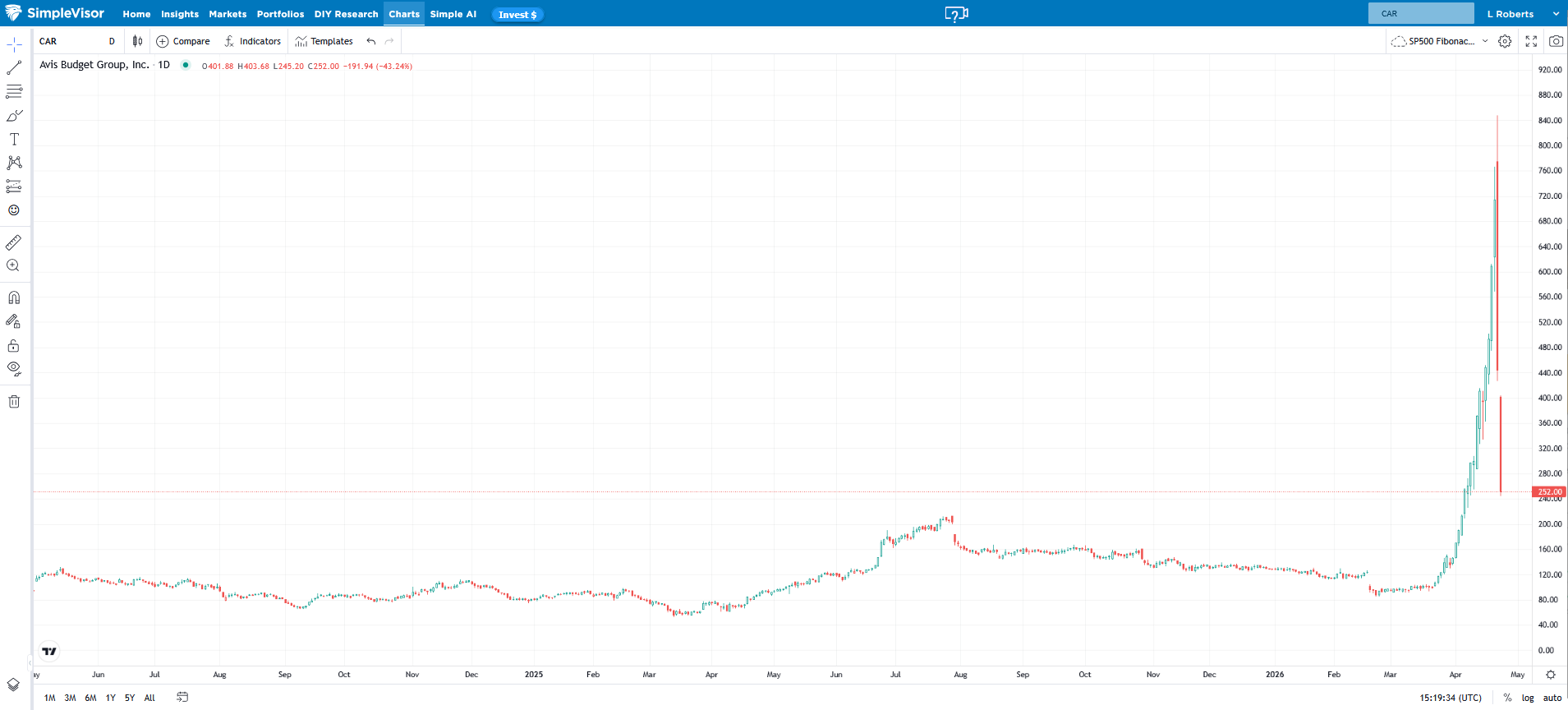
Wednesday’s Commentary, Car is Racing Higher, we led with a discussion of the stunning price surge in CAR shares. To wit, in about one month, the stock peaked near $800 per share, up from slightly under $100. The primary rationale for the sharp increase was a short squeeze, as we explained. While we didn’t know how much higher the squeeze could carry CAR, we were confident it wouldn’t end well. Accordingly, we stated:
While CAR can certainly go higher, the move is not sustainable. The reason is quite simply that CAR’s fundamentals are horrendous.
Little did we know that CAR would crash as quickly as it did, as shown below. After peaking on Wednesday morning, the stock fell precipitously. Hours after the downward spiral started, the company announced it was moving its earnings data up by two weeks. Given that the company is in an earnings blackout, they were unable to issue new shares at the higher prices. Thus, by moving up the earnings data, they could sell shares earlier. It may not have mattered, as the market figured out why the earnings date was changing and started selling aggressively to get ahead of the share dilution. This is yet another meme stock/short squeeze that worked fabulously until it didn’t!
Tweet of the Day
“Want to achieve better long-term success in managing your portfolio? Here are our 15-trading rules for managing market risks.”
Please subscribe to the daily commentary to receive these updates every morning before the opening bell.
If you found this blog useful, please send it to someone else, share it on social media, or contact us to set up a meeting.